

“I wanted to bring to Milan everything I had learned,” he reflects, “merging techniques, ingredients, and emotions discovered across Asia, South America, and the Mediterranean.”
What took form was not a concept in the conventional sense, but a worldview made tangible. That sensibility carries through everything Yapa holds. The cuisine resists borders while remaining grounded; nomadic, yet precise. “Each dish is a conversation between past and present,” Matteo says, an approach that values memory as much as invention.
This restraint extends beyond the plate. Materials are chosen for their honesty, music for its ability to shape rhythm, and space for how it supports encounter rather than spectacle.
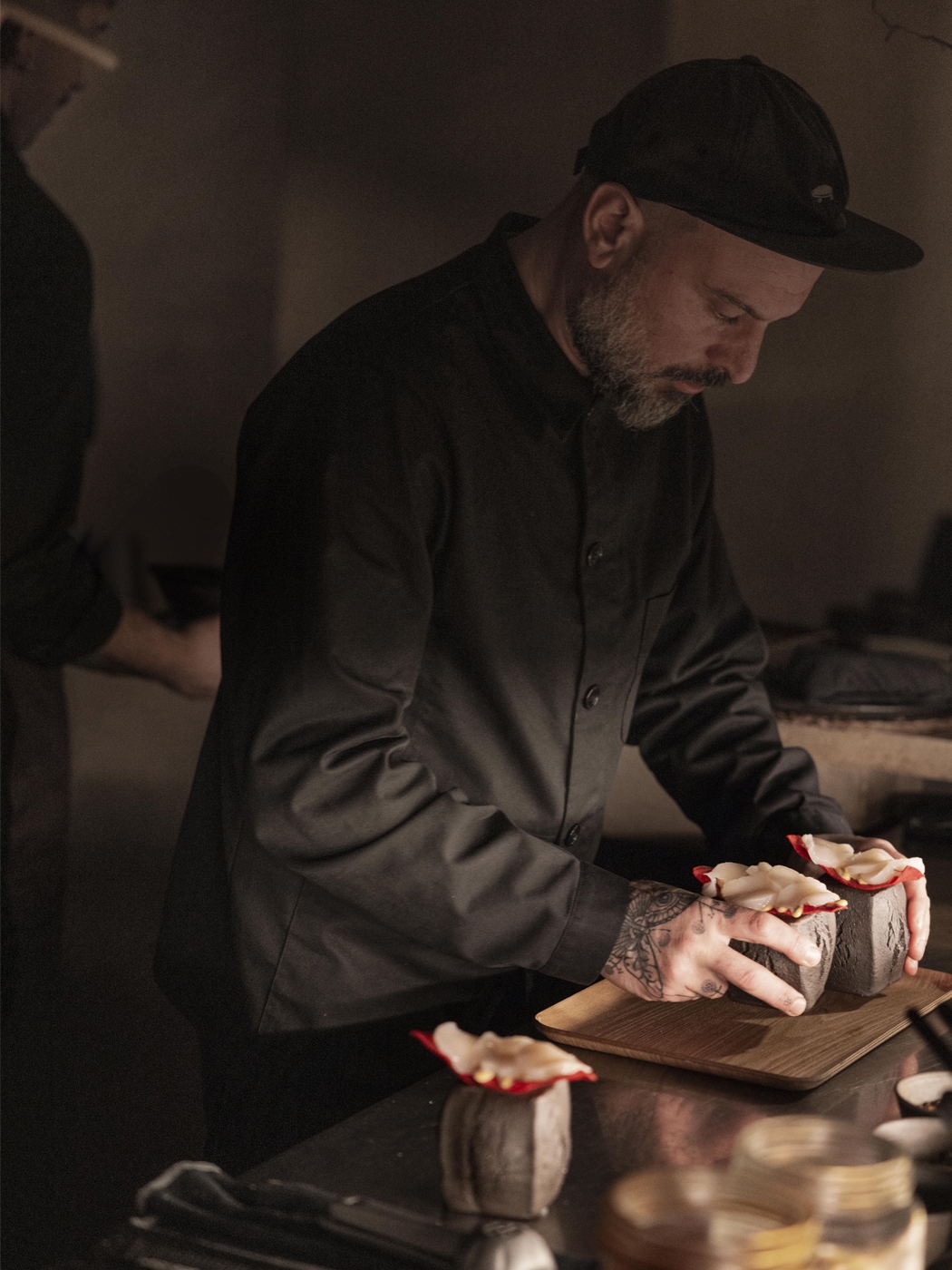
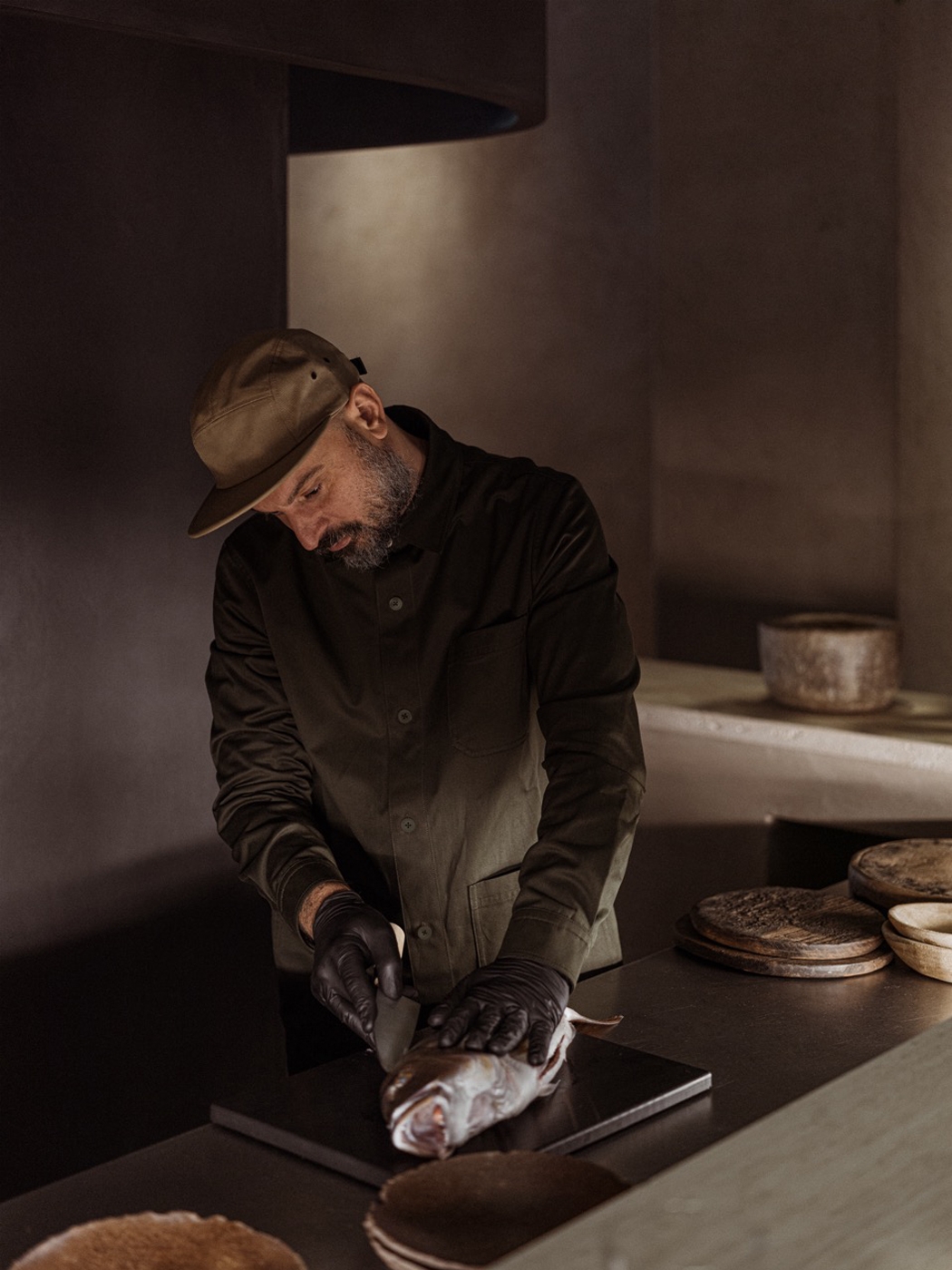
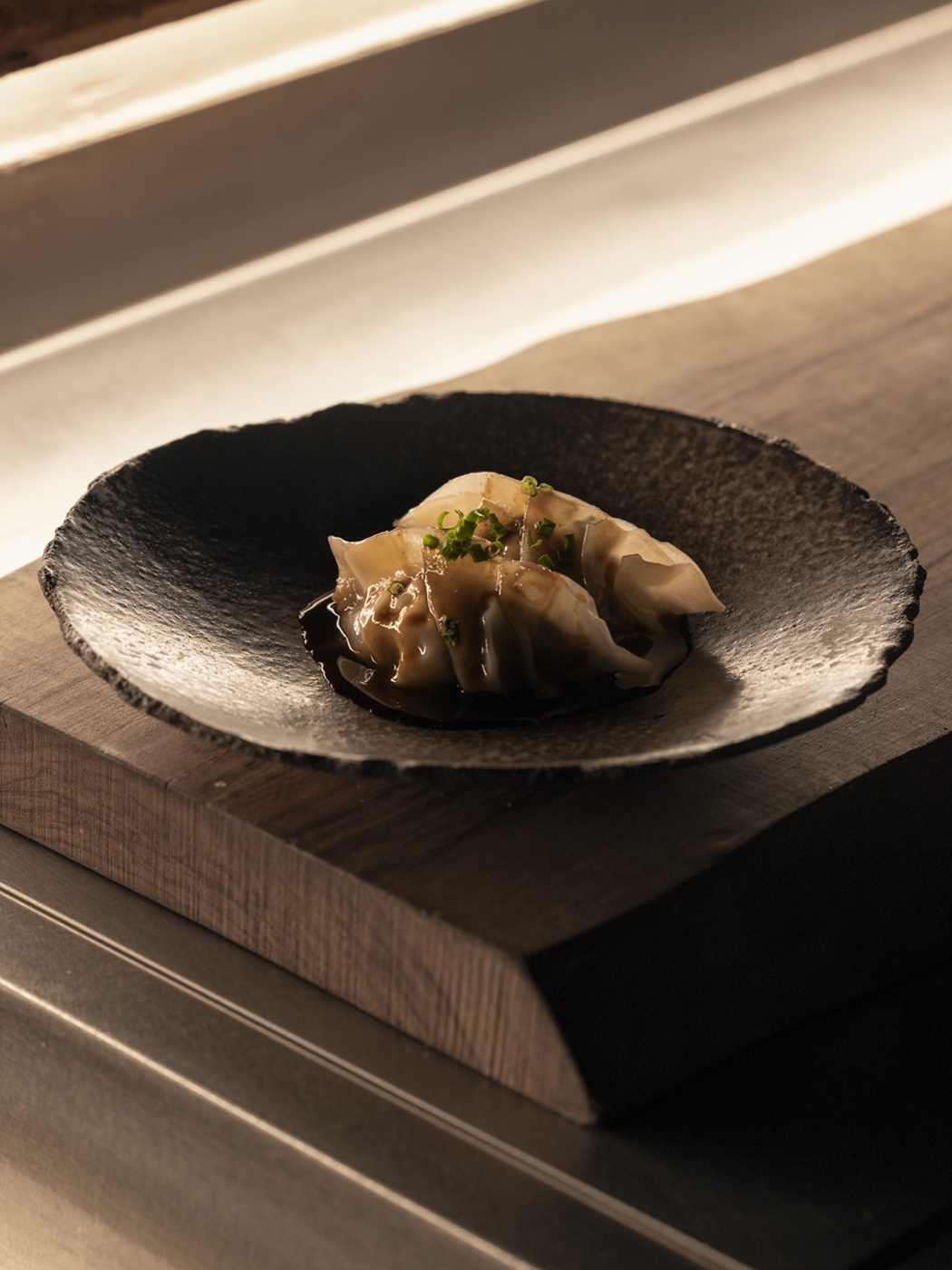
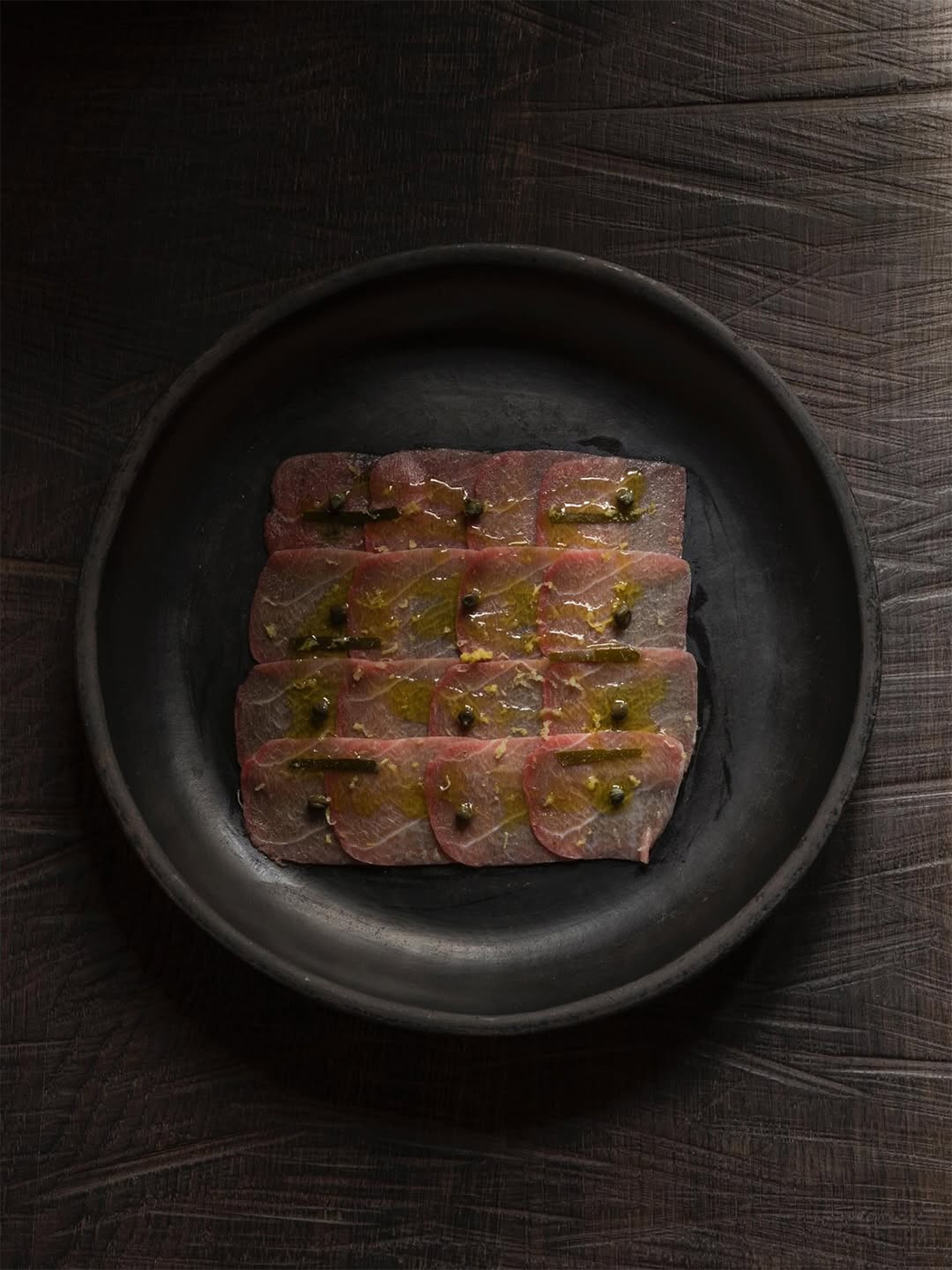
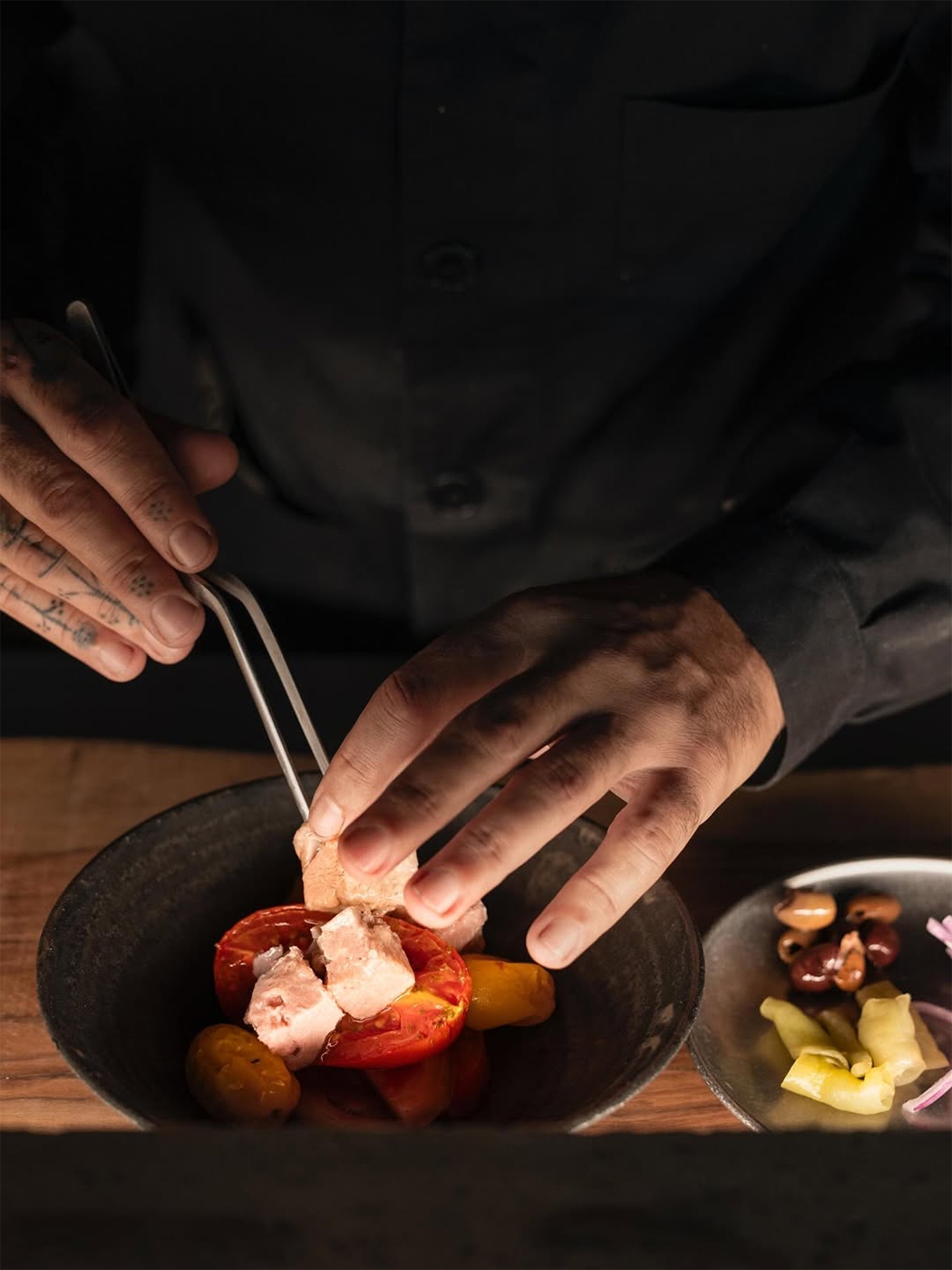
“The brutalist and material soul of Yapa’s design is reflected in our dishes,” he notes. “We focus on the essentiality of raw materials, evocative but elementary.”
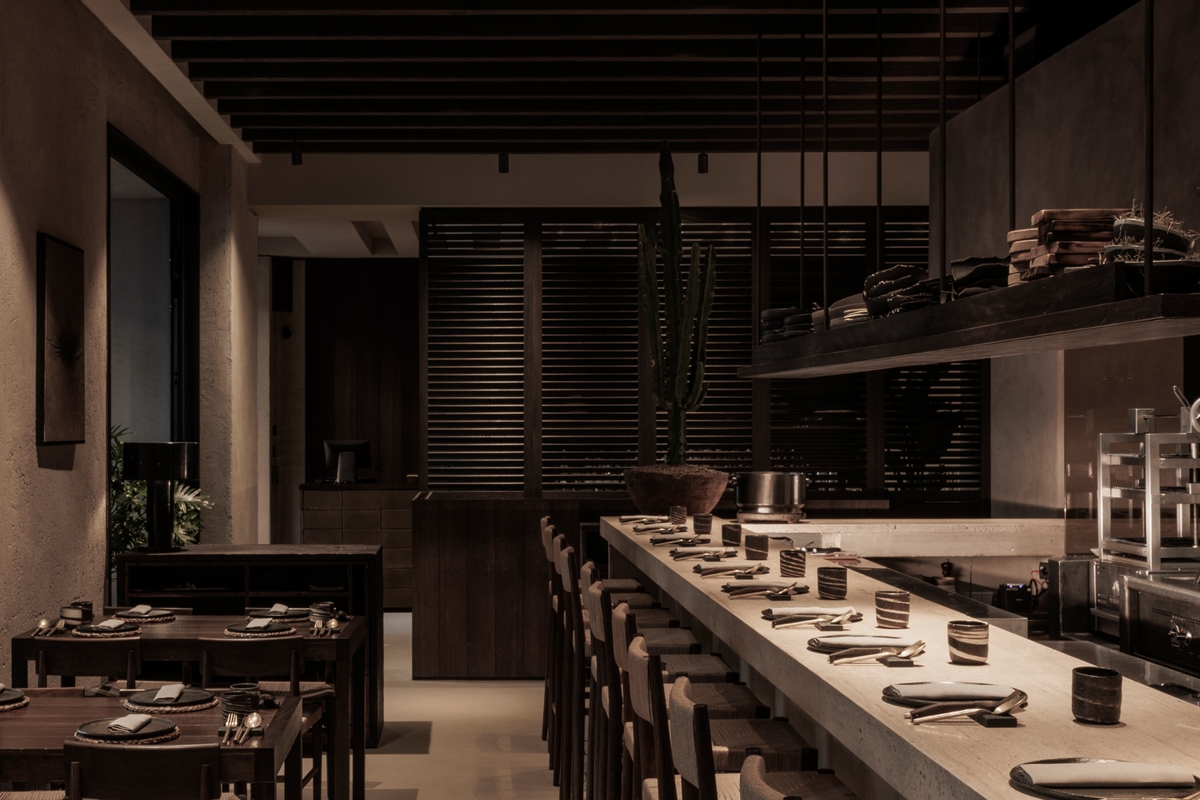
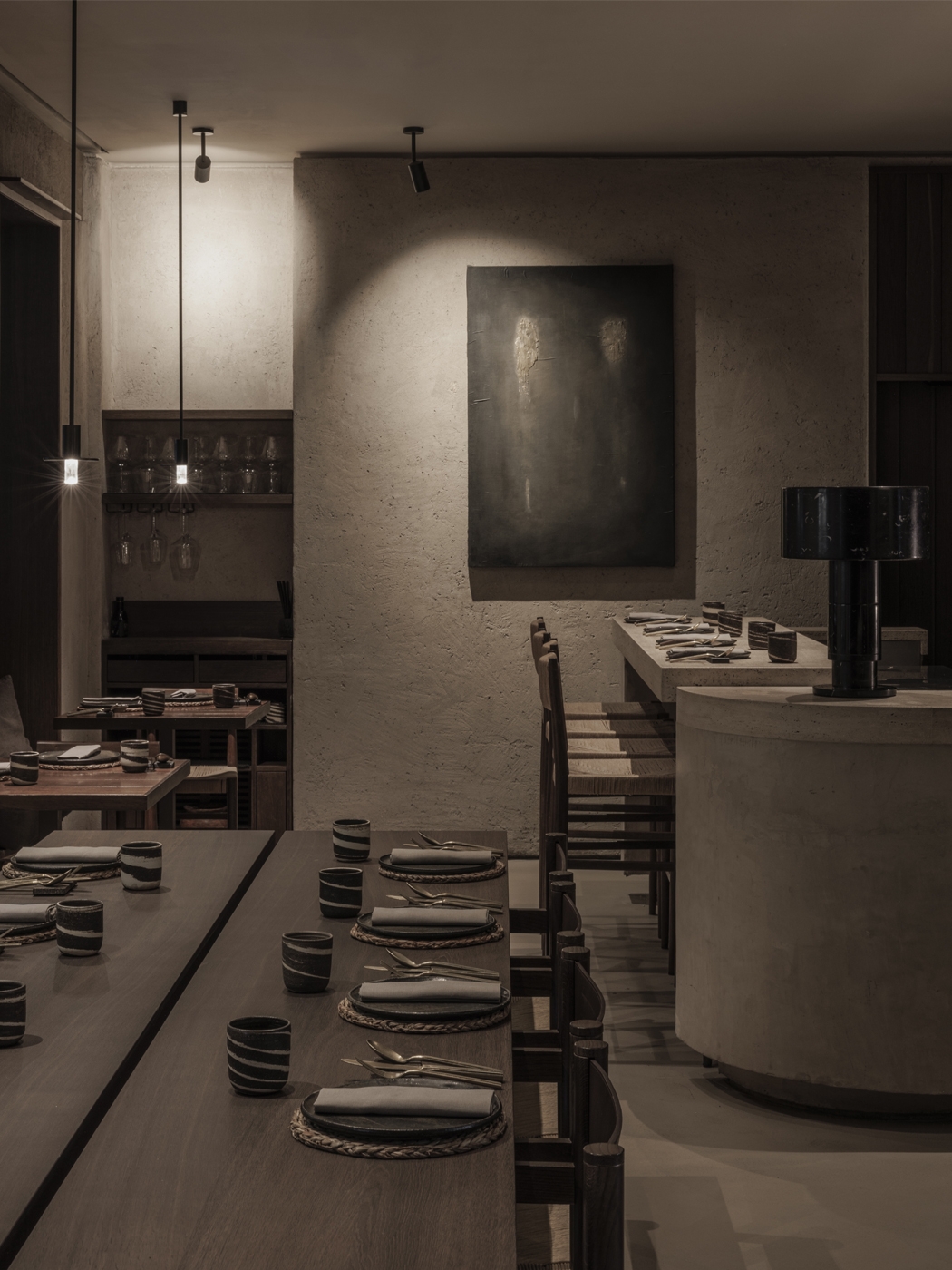
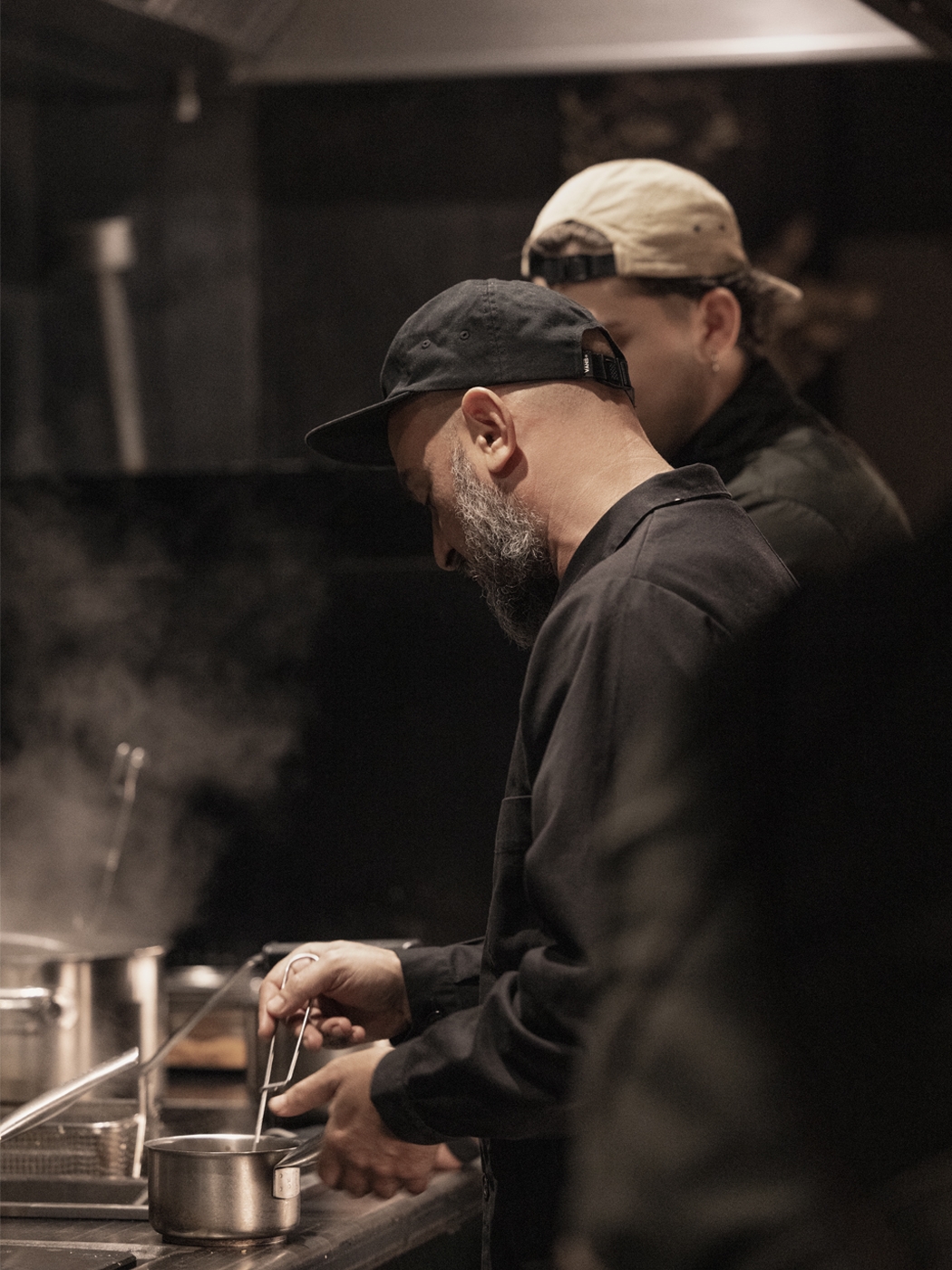
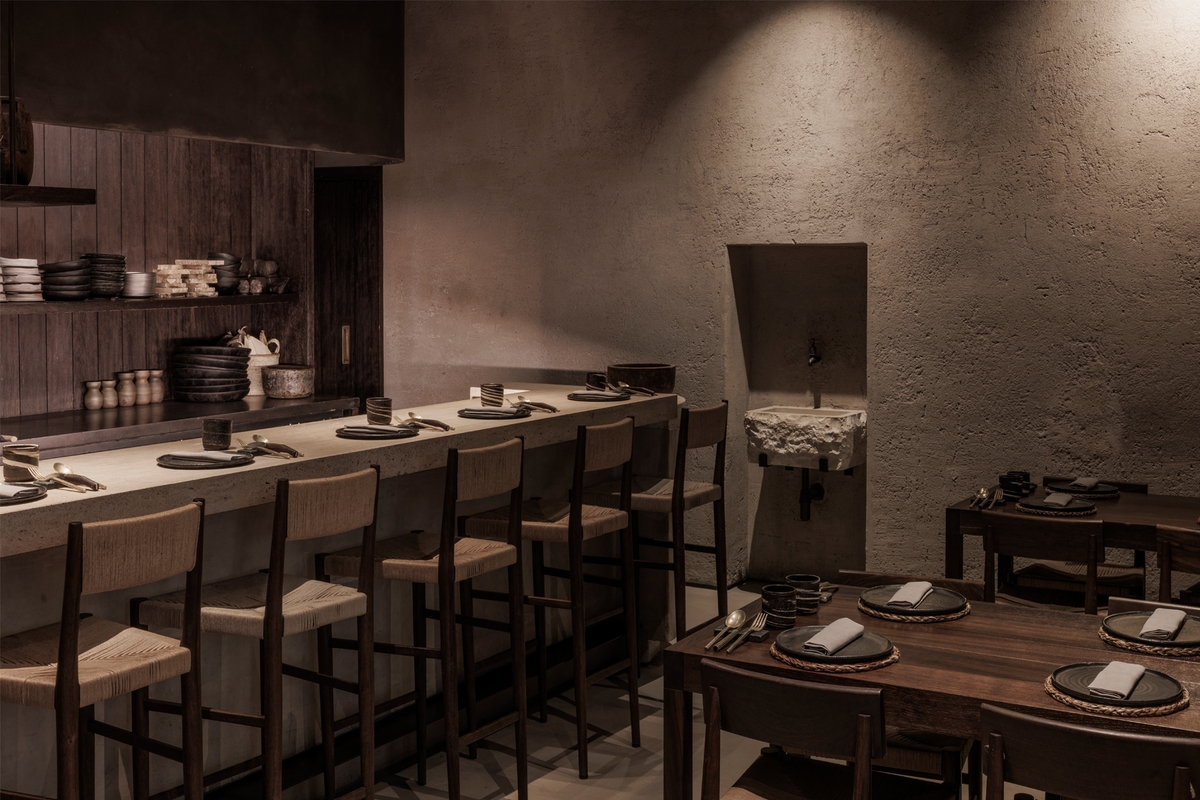
In this next chapter, that thinking begins to shape how the restaurant moves. What were once separate rear rooms were opened into a single volume, allowing the space to read as a continuous field rather than a sequence of enclosed moments. Shutters introduce pauses and partial concealment, while the lowered bar and wraparound counter draw guests into closer proximity, softening hierarchy. The kitchen remains visible within this arrangement — not as spectacle, but as presence.
What results is an atmosphere shaped through alignment rather than assertion. Food, space, movement, and sound operate as parallel languages, held together through careful judgement. The changes do not seek to expand the identity, but to deepen it, introducing a more immersive, bar-led rhythm while remaining faithful to what was already present.
“The space must fully reflect the gastronomic offering,” Matteo says. “Otherwise, the identity risks becoming confused.”
At Yapa, coherence is not decorative. It is lived, felt in how guests arrive, linger, and return, shaped quietly through decisions that prioritise experience over display.

Editorial
ImageBjörn Ceder
In Dialogue – Matteo Pancetti
Essays
As Yapa Milan enters its second chapter, Chef Matteo Pancetti reflects on travel, memory, and the quiet alignment between cuisine and space that shapes the restaurant’s atmosphere.
Yapa Milan was never conceived as a fixed idea. It emerged from movement across geographies, cultures, and forms of gathering, shaped slowly through experience rather than ambition. After more than twenty years travelling, cooking, and absorbing different ways of eating and living, Matteo Pancetti began drawing these threads together.
“I wanted to bring to Milan everything I had learned,” he reflects, “merging techniques, ingredients, and emotions discovered across Asia, South America, and the Mediterranean.”
What took form was not a concept in the conventional sense, but a worldview made tangible. That sensibility carries through everything Yapa holds. The cuisine resists borders while remaining grounded; nomadic, yet precise. “Each dish is a conversation between past and present,” Matteo says, an approach that values memory as much as invention.
This restraint extends beyond the plate. Materials are chosen for their honesty, music for its ability to shape rhythm, and space for how it supports encounter rather than spectacle.
“The brutalist and material soul of Yapa’s design is reflected in our dishes,” he notes. “We focus on the essentiality of raw materials, evocative but elementary.”
In this next chapter, that thinking begins to shape how the restaurant moves. What were once separate rear rooms were opened into a single volume, allowing the space to read as a continuous field rather than a sequence of enclosed moments. Shutters introduce pauses and partial concealment, while the lowered bar and wraparound counter draw guests into closer proximity, softening hierarchy. The kitchen remains visible within this arrangement — not as spectacle, but as presence.
What results is an atmosphere shaped through alignment rather than assertion. Food, space, movement, and sound operate as parallel languages, held together through careful judgement. The changes do not seek to expand the identity, but to deepen it, introducing a more immersive, bar-led rhythm while remaining faithful to what was already present.
“The space must fully reflect the gastronomic offering,” Matteo says. “Otherwise, the identity risks becoming confused.”
At Yapa, coherence is not decorative. It is lived, felt in how guests arrive, linger, and return, shaped quietly through decisions that prioritise experience over display.