
The reference is both architectural and cultural. Drawing from Mayan and South American influences, the tables are conceived as communal forms, generous in scale and grounded in presence. Here, proximity is invited, allowing conversation to settle and time to stretch.
In this sense, they are not placed into the space. They emerge from it.
Rather than existing as individual objects, the tables form part of a broader spatial language, defined less by elements and more by the relationships between them — between surface and light, between movement and stillness, between people and the room that holds them. Their proportions and weight respond to how the space is inhabited, aligning with an atmosphere that feels composed rather than arranged.
“They only make sense in context,” Hannah reflects. “In relation to everything around them.”
At StudioMacBride, the direction is set early, before form is resolved, guiding how the space is ultimately realised. Furniture is not an addition to this thinking, but a continuation of it, extending the narrative into objects that are touched and lived with.
Realising this requires a particular kind of collaboration, one that operates through translation.
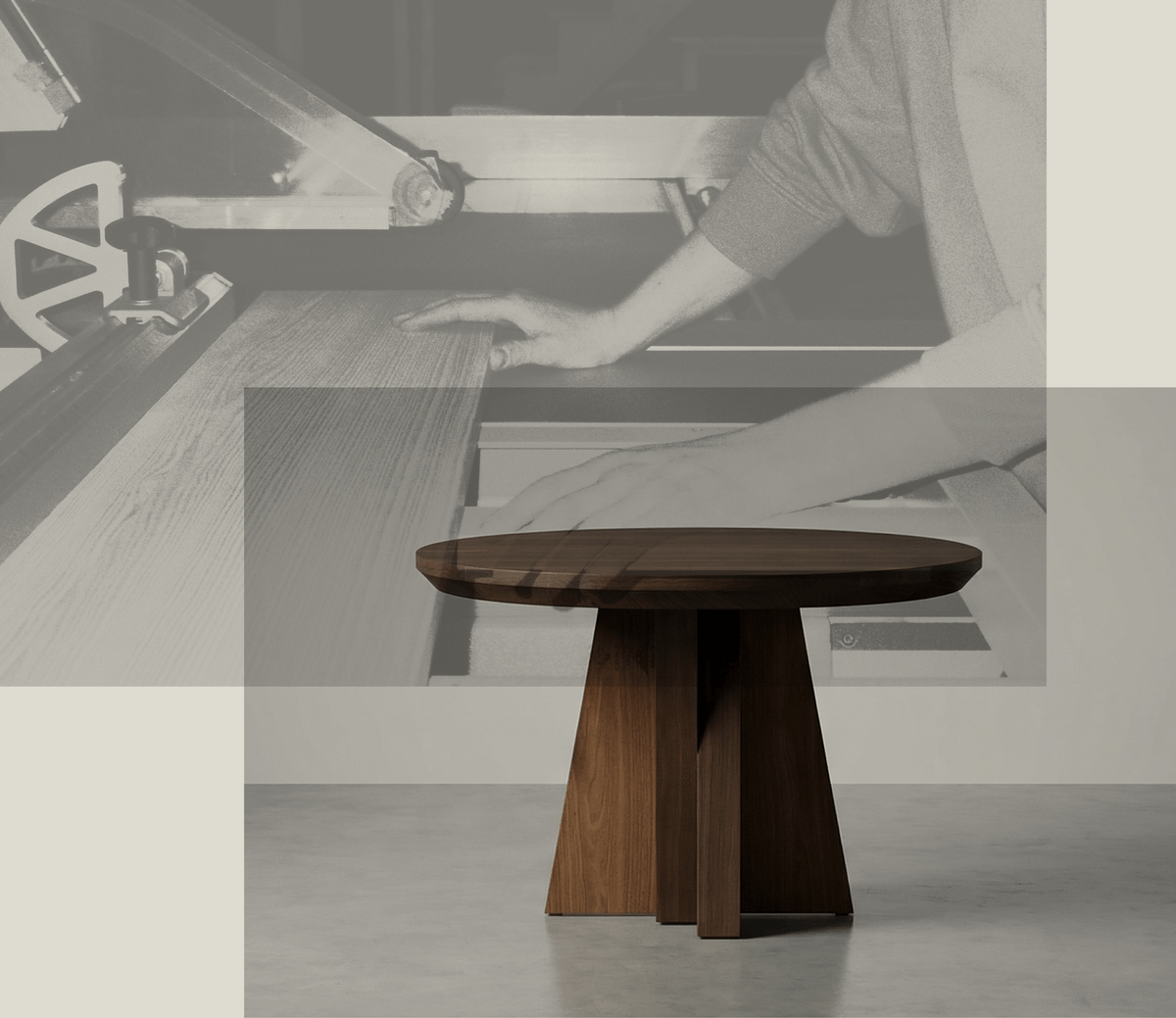
In Hannah’s work, that translation is grounded in making. Her role is to bring clarity to the studio’s intent, giving it material form without losing its precision. It begins with understanding the space in detail, its dimensions and rhythms, and how the tables will be lived over time.
“I always try out and measure,” she explains, “and find out as much as possible about the space and how the furniture will be used.”
Through testing and adjustment, the work moves from idea into reality. Dimensions are refined, structures resolved, each decision calibrated so the piece can exist with quiet stability, present without feeling overworked.
Material sits at the centre of this process. It is not controlled, but understood. Each piece of wood carries its own grain, knots, and variation — qualities that shape what the piece can become.
“To see the planks in their raw state always reminds me how precious this material is,” Hannah reflects. “It’s exciting to imagine the potential beauty.”
Rather than correcting what appears, she works with it — allowing these irregularities to inform the outcome.
“I feel strongly about using resources responsibly,” she says. “The irregularities are a challenge, but also what gives the piece its character.”
The tables retain a sense of origin, not resolved to uniformity but carrying variation and the marks of their making, with time introducing another layer.
“I know that the colour will fade or become darker over time,” she reflects, “but it can last longer than a lifetime.”
What is made is not fixed. It continues to evolve through use and contact, shaped gradually by presence. The surface softens, the tone deepens, and the table becomes less an object than a record of the life around it.
Its role shifts quietly, becoming part of what gathers around it rather than something to be observed.
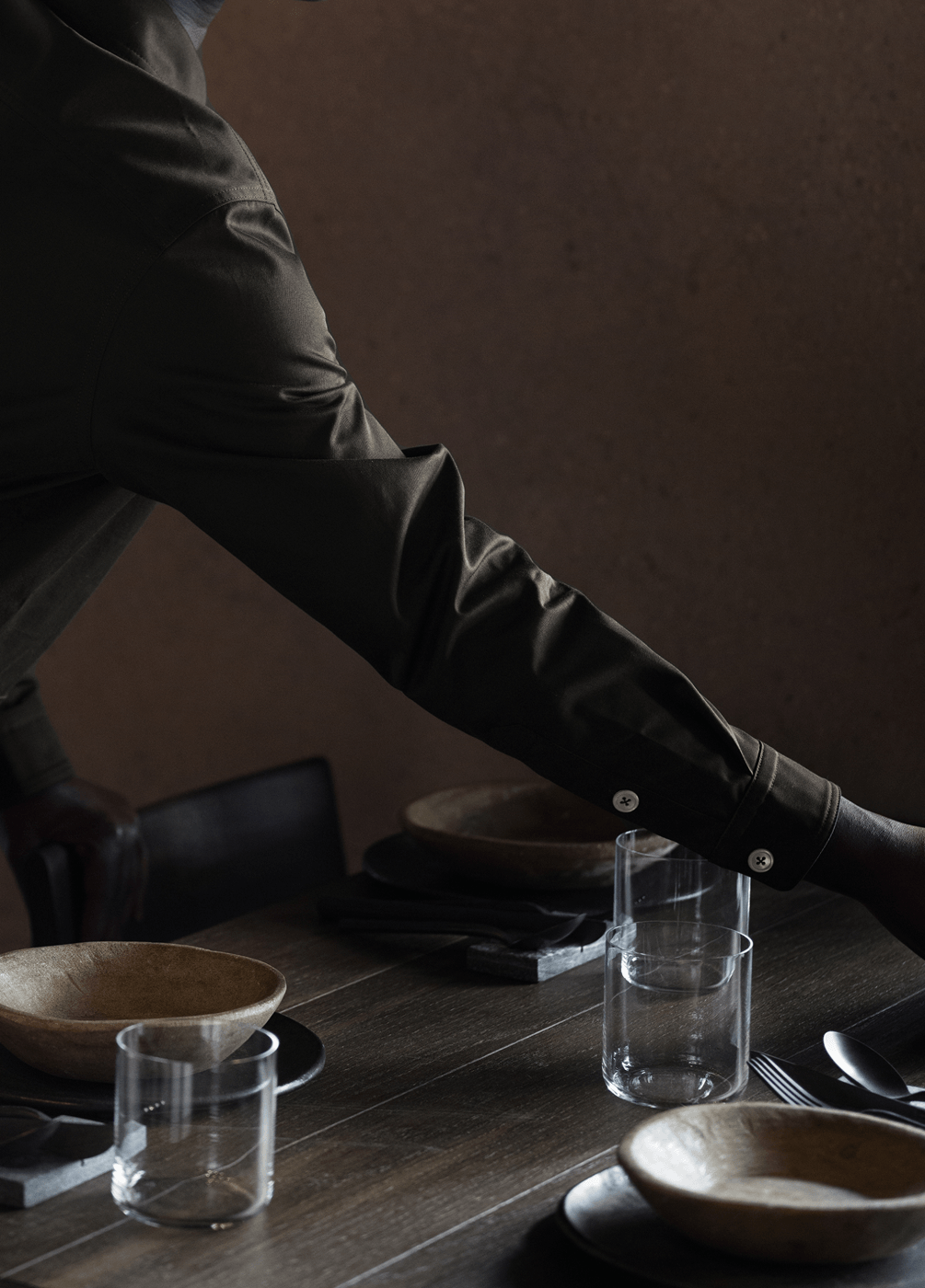
“When I see a dining table set,” Hannah reflects, “it’s not so much about the table itself but about a group of friends or a family coming together…”
The object recedes, allowing the experience to come forward.
Across Yapa, this understanding extends beyond the tables. Nothing exists in isolation. Each element contributes to a larger composition, shaped through alignment rather than assertion. The studio defines the direction, the maker realises it through material and process, both anchored to the same intention: to create a space that holds people with ease.
In this alignment, the tables find their place.
Not as focal points, but as quiet structures of gathering, anchoring the room and supporting its rhythm as it is lived over time.


Editorial
ImagesRoh Studio
In Dialogue – Hannah Rotthaus
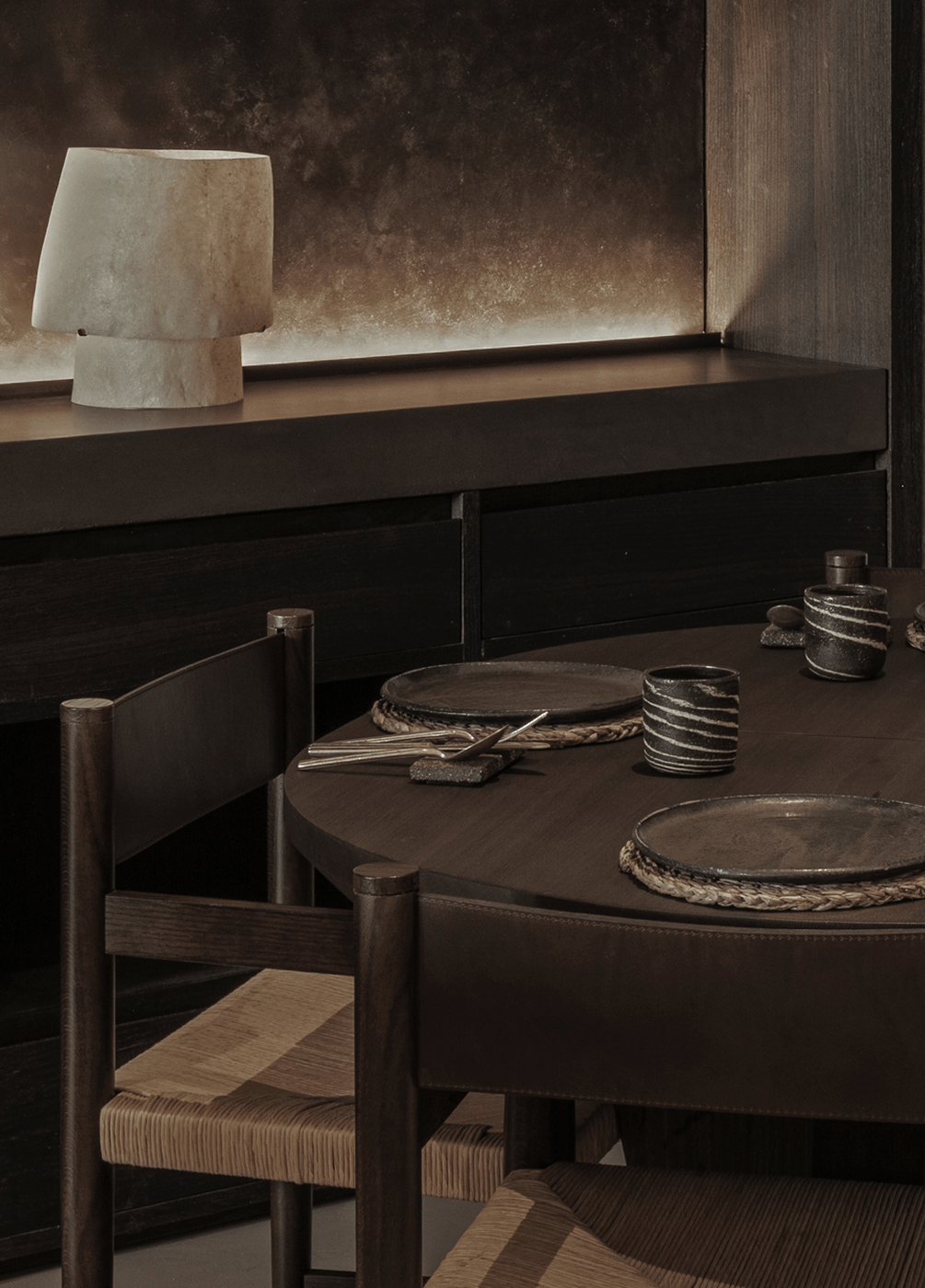
There are objects that sit within a room, and others that quietly define how it is lived. At Yapa Milano, the tables belong to the latter.
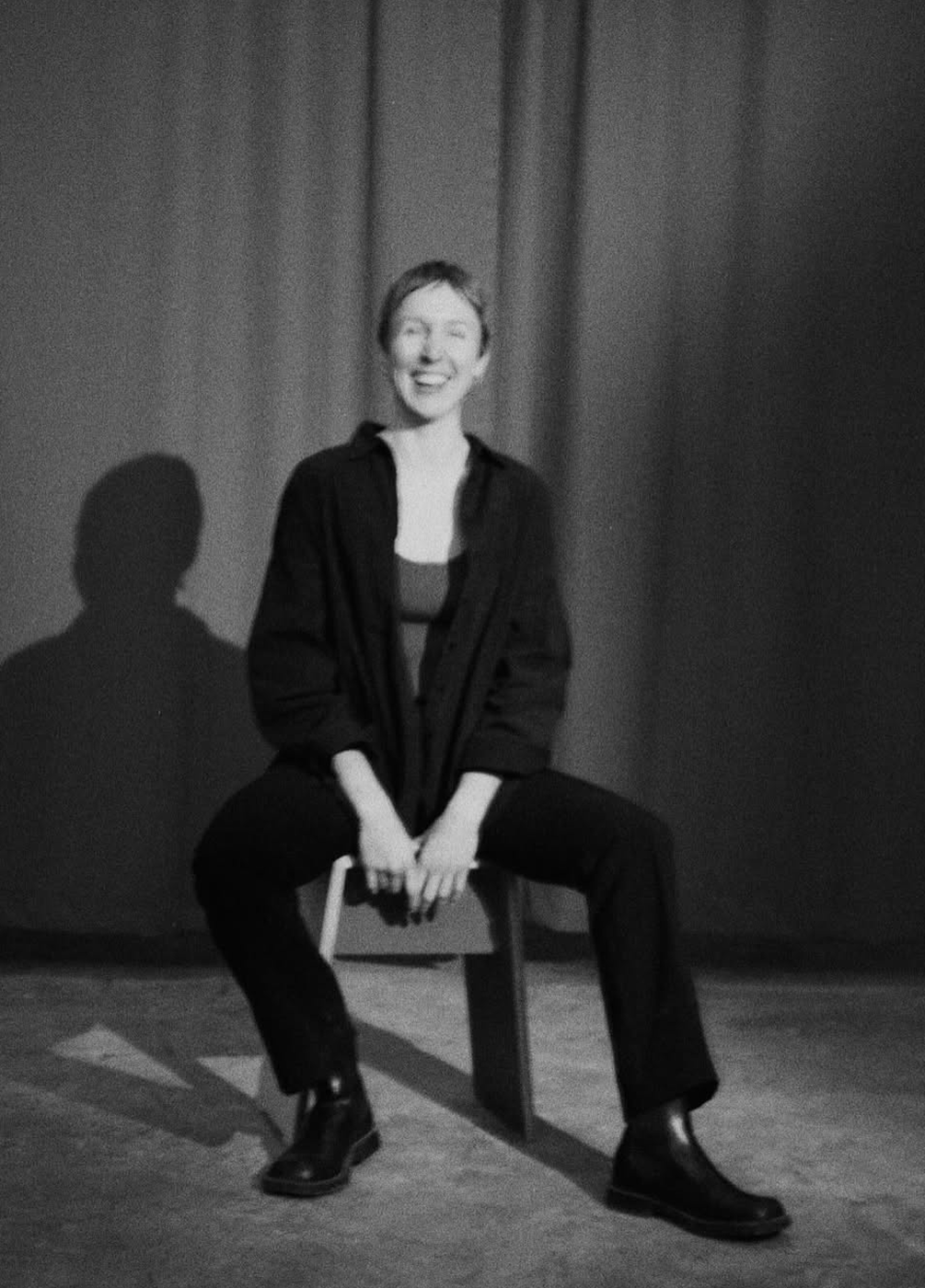
For Hannah Rotthaus, they do not begin as standalone pieces, but as part of a deeper intention, shaped by gathering and by the rituals that form around people coming together.
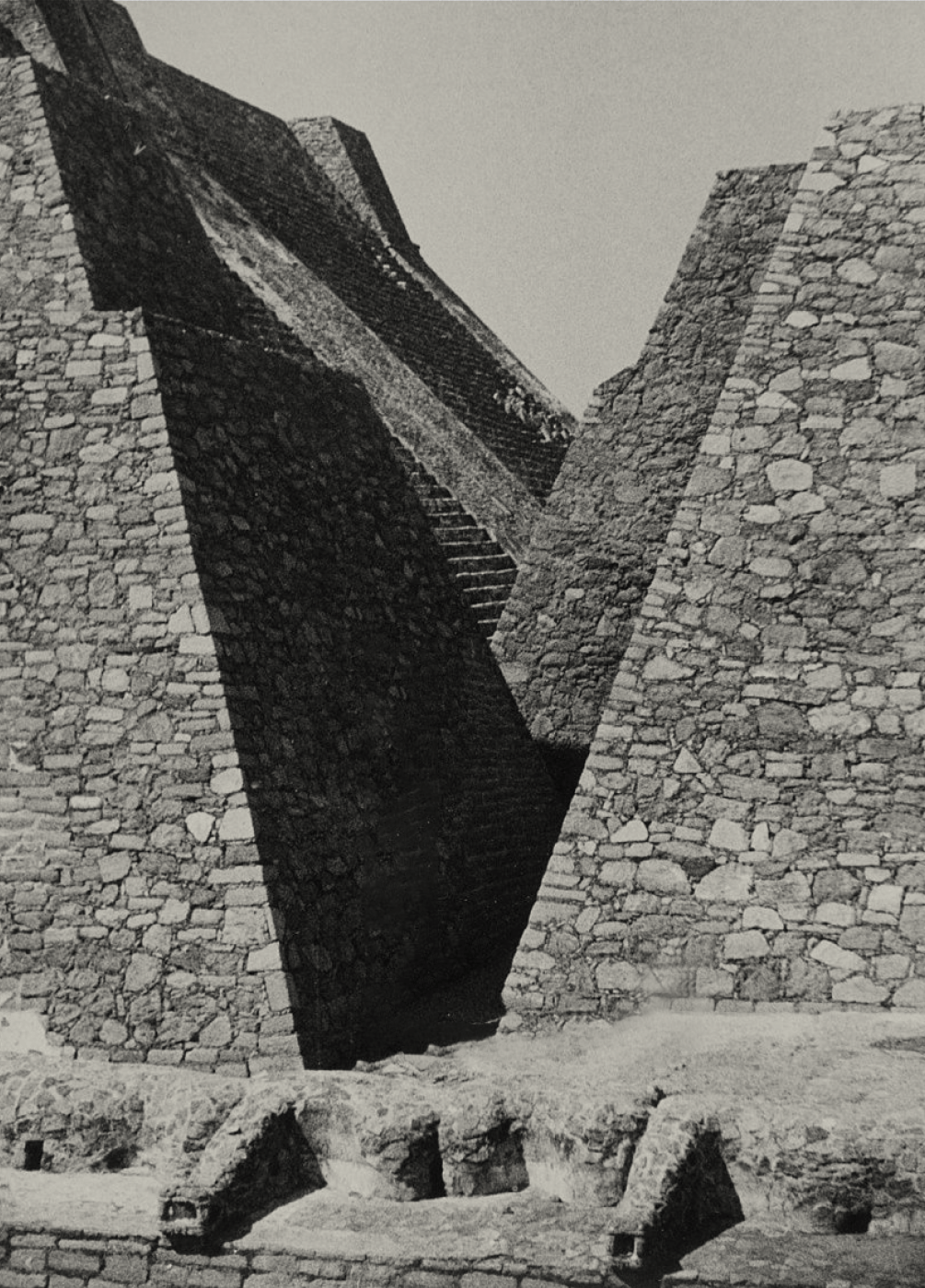
The reference is both architectural and cultural. Drawing from Mayan and South American influences, the tables are conceived as communal forms, generous in scale and grounded in presence. Here, proximity is invited, allowing conversation to settle and time to stretch.
In this sense, they are not placed into the space. They emerge from it.
Rather than existing as individual objects, the tables form part of a broader spatial language, defined less by elements and more by the relationships between them — between surface and light, between movement and stillness, between people and the room that holds them. Their proportions and weight respond to how the space is inhabited, aligning with an atmosphere that feels composed rather than arranged.
“They only make sense in context,” Hannah reflects. “In relation to everything around them.”
At StudioMacBride, the direction is set early, before form is resolved, guiding how the space is ultimately realised. Furniture is not an addition to this thinking, but a continuation of it, extending the narrative into objects that are touched and lived with.
Realising this requires a particular kind of collaboration, one that operates through translation.
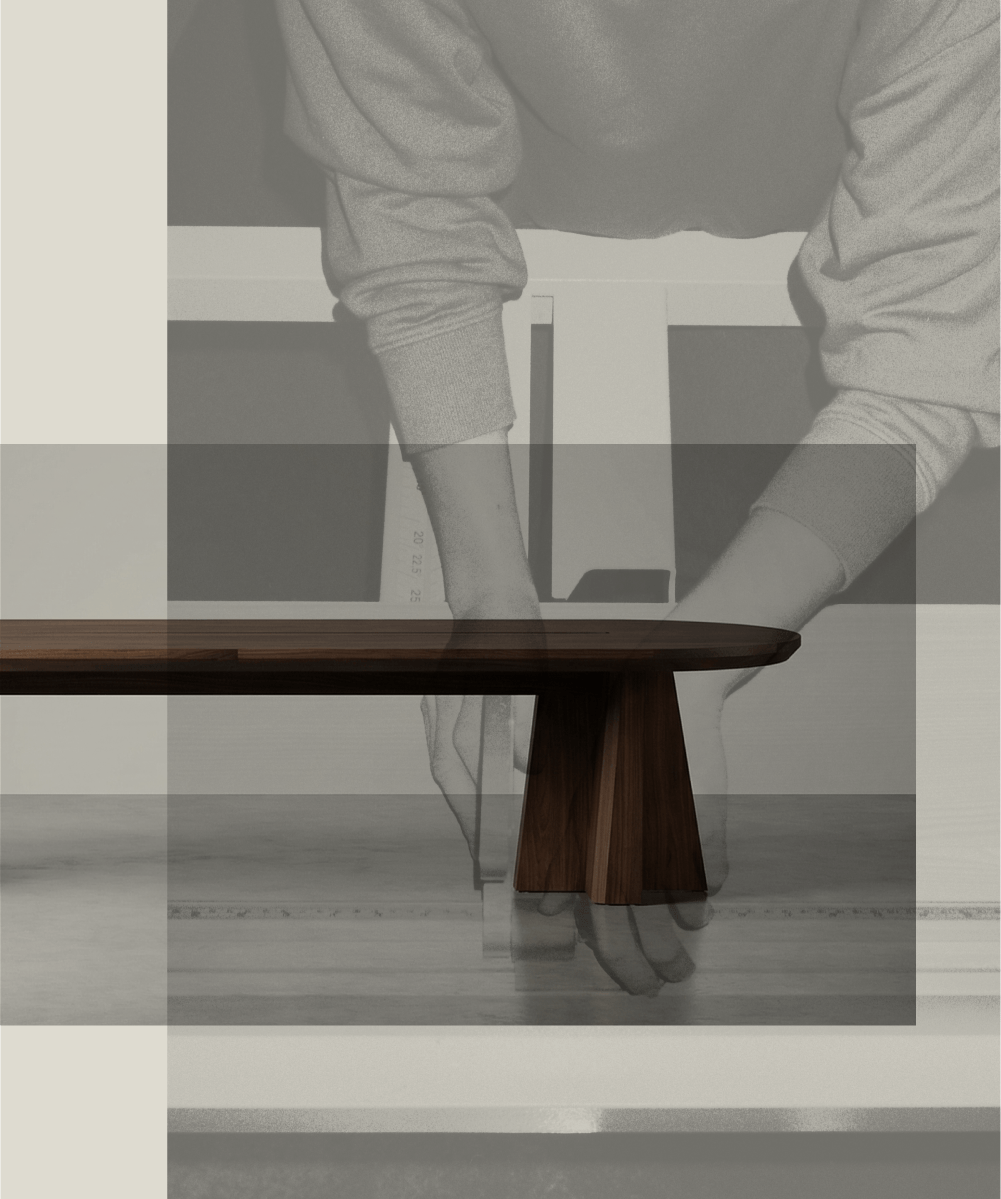
In Hannah’s work, that translation is grounded in making. Her role is to bring clarity to the studio’s intent, giving it material form without losing its precision. It begins with understanding the space in detail, its dimensions and rhythms, and how the tables will be lived over time.
“I always try out and measure,” she explains, “and find out as much as possible about the space and how the furniture will be used.”
Through testing and adjustment, the work moves from idea into reality. Dimensions are refined, structures resolved, each decision calibrated so the piece can exist with quiet stability, present without feeling overworked.
Material sits at the centre of this process. It is not controlled, but understood. Each piece of wood carries its own grain, knots, and variation — qualities that shape what the piece can become.
“To see the planks in their raw state always reminds me how precious this material is,” Hannah reflects. “It’s exciting to imagine the potential beauty.”
Rather than correcting what appears, she works with it — allowing these irregularities to inform the outcome.
“I feel strongly about using resources responsibly,” she says. “The irregularities are a challenge, but also what gives the piece its character.”
The tables retain a sense of origin, not resolved to uniformity but carrying variation and the marks of their making, with time introducing another layer.
“I know that the colour will fade or become darker over time,” she reflects, “but it can last longer than a lifetime.”
What is made is not fixed. It continues to evolve through use and contact, shaped gradually by presence. The surface softens, the tone deepens, and the table becomes less an object than a record of the life around it.
Its role shifts quietly, becoming part of what gathers around it rather than something to be observed.
“When I see a dining table set,” Hannah reflects, “it’s not so much about the table itself but about a group of friends or a family coming together…”
The object recedes, allowing the experience to come forward.
Across Yapa, this understanding extends beyond the tables. Nothing exists in isolation. Each element contributes to a larger composition, shaped through alignment rather than assertion. The studio defines the direction, the maker realises it through material and process, both anchored to the same intention: to create a space that holds people with ease.
In this alignment, the tables find their place.
Not as focal points, but as quiet structures of gathering, anchoring the room and supporting its rhythm as it is lived over time.